
In today’s digital world, mental health apps are key for self-care. They offer a handy and personal way to look after our minds. This is especially true as we look for easy-to-use resources.
Life today can be tough, and our mental health matters more than ever. This article will look at the many mental health apps out there. We’ll see what they offer and how to pick the best one for you.
👉 Break bad habits and boost focus with the 🛒 kSafe Time Locking Container—a smart way to lock away distractions like snacks, phones, cigarettes, drinking, or gaming addiction.
Table of Contents
- The Digital Revolution in Mental Health Support
- Benefits of Using Mental Health Apps
- How to Choose the Right Mental Health App for Your Needs
- Headspace: Meditation and Mindfulness Made Simple
- Calm: Sleep, Meditation, and Relaxation
- Woebot: AI-Powered Cognitive Behavioural Therapy
- MoodMission: Evidence-Based Mood Improvement
- Wysa: Your AI Mental Health Ally
- Sanvello: Stress, Anxiety, and Depression Support
- NHS-Approved Apps: Trusted Mental Health Resources
- Talkspace: Online Therapy and Counselling
- MindDoc: Mood Tracking and Mental Health Insights
- Essential Resources, Tips, and Education for Mental Health Self-Care
- Free vs. Premium Mental Health Apps: What’s Worth Paying For
- Privacy and Data Security in Mental Health Apps
- Conclusion
- Frequently Asked Questions (FAQ)
- What are mental health apps, and how can they support self-care?
- Are mental health apps a replacement for traditional therapy?
- How do I choose the right mental health app for my needs?
- Are mental health apps secure and private?
- Can I use mental health apps for free?
- Are there any mental health apps specifically recommended by the NHS?
- How can I integrate mental health apps into my overall mental health plan?
- What should I look for when evaluating the credibility of a mental health app?
Key Takeaways
- Mental health apps provide accessible self-care support.
- Various apps cater to different mental health needs.
- Choosing the right app involves considering individual requirements.
- Self-care is crucial for maintaining good mental health.
- Digital resources can complement traditional mental health support.
The Digital Revolution in Mental Health Support
The digital revolution is changing how we get mental health support in the UK. More people need help, and technology is making it easier to get it.
The Growing Need for Accessible Mental Health Solutions
Mental health issues are on the rise in the UK. This makes it clear we need solutions we can all use. Digital mental health support is key, offering quick and easy care.
How Technology is Transforming Self-Care Practices
Technology is changing self-care with digital tools and platforms. Mental health apps, for example, provide meditation, mood tracking, and therapy. They make self-care easier and more tailored to you.
The UK Mental Health Landscape and Digital Solutions
The UK’s mental health scene is shifting, with digital solutions at the forefront. Key points include:
- More people can access mental health services
- Technology is being used in care plans
- Personalized care thanks to data analysis
By embracing digital change, the UK is creating a more inclusive mental health care system.
Benefits of Using Mental Health Apps
Mental health apps bring many benefits to help improve mental wellbeing. They offer features for different needs, making them useful for many people.
Accessibility and Convenience
One big plus of mental health apps is how accessible and convenient they are. You can use them on your phone, anytime, anywhere. This is great for those who are always busy or can’t get to therapy easily.
Privacy and Reduced Stigma
These apps also provide privacy, helping to lower the stigma of seeking mental health help. You can use them privately, without fear of being judged. This is especially helpful for those who might feel shy about asking for help.
Cost-Effectiveness Compared to Traditional Therapy
Another big advantage is how cost-effective mental health apps are. Many are free or very cheap, which is much less than traditional therapy. Here’s a comparison:
| Service | Cost |
|---|---|
| Traditional Therapy Session | £50-£100 per session |
| Mental Health App Subscription | £5-£10 per month |
| Free Mental Health Apps | £0 |
Integration with NHS Mental Health Services
Some mental health apps are now working with NHS mental health services. This helps keep care consistent for users. It’s a big step forward for mental health care in the UK.
How to Choose the Right Mental Health App for Your Needs
Choosing the right mental health app is about knowing what you need and checking the app’s features. There are many options out there. It’s important to pick wisely.
Identifying Your Mental Health Goals
Start by figuring out what you want from a mental health app. Do you need help with anxiety, depression, or stress? Or maybe you want an app for mindfulness and meditation? Knowing your goals helps you find the right app for you.
Considering Evidence-Based Approaches
Look for apps that use proven methods. Apps that use Cognitive Behavioural Therapy (CBT), mindfulness, or meditation are good choices. They have been shown to help with mental health issues. Some apps even share research to back up their effectiveness.
Evaluating Privacy and Data Security
Remember, mental health apps handle personal info. So, it’s key to check their privacy and security. Make sure the app follows GDPR and uses strong encryption to keep your data safe.
NHS App Library and ORCHA Ratings
For easier choices, use resources like the NHS App Library and ORCHA ratings. The NHS App Library lists safe and effective mental health apps. ORCHA gives independent ratings to help you decide.
By thinking about these points, you can pick a mental health app that fits your needs. It will help you stay mentally well.
Headspace: Meditation and Mindfulness Made Simple
Headspace is a top choice for meditation apps. It’s easy to use and really works. It helps people feel better by offering guided meditations and mindfulness exercises.
Overview
Headspace makes meditation easy for everyone. It guides users to start a mindfulness practice. This helps them stay consistent.
- Guided meditation sessions for various goals, such as stress reduction and improved focus.
- Personalized meditation plans based on user preferences and goals.
- Animated tutorials to explain meditation techniques and concepts.
Pricing and Accessibility
Headspace has a free basic plan. Premium features are available with a subscription. It works on both iOS and Android, so it’s easy to get.
Pros and Cons
Pros: It’s easy to use, has lots of content, and the guided meditations really help.
Cons: Some might think it’s too pricey. The free version doesn’t have as much.
| Feature | Free Version | Premium Version |
|---|---|---|
| Guided Meditations | Limited | Full Access |
| Personalized Plans | No | Yes |
| Offline Access | No | Yes |
UK-Specific Offerings
In the UK, Headspace is very popular. It fits with NHS health plans. It has programs for stress and sleep, tailored for UK users.
Calm: Sleep, Meditation, and Relaxation
Calm offers a peaceful escape from the world’s noise. It has a vast library of sleep stories, meditations, and relaxation exercises. It’s known for helping improve sleep, reduce stress, and boost well-being.
Overview
Calm is a go-to for mental health improvement. It offers guided meditations, sleep stories, and relaxing music. It’s available on iOS and Android, reaching many users.
- Guided Meditations: Calm has meditations for stress, focus, and more.
- Sleep Stories: Calming stories to help you sleep, told by soothing voices.
- Relaxing Music: Music to create a peaceful mood.
- Masterclasses: Expert-led sessions on mindfulness and meditation.
Pricing and Accessibility
Calm uses a freemium model. It offers free content but more premium stuff for subscribers. The subscription fee is competitive, offering great value for the content.
Pros and Cons
Calm has its benefits and drawbacks. It has a vast library, is easy to use, and helps with stress and sleep. But, some might find the subscription too expensive for premium content.
UK-Specific Offerings
Calm is available in the UK and offers content for UK users. While the main content is global, it includes UK-specific features. These include sleep stories and relaxation techniques for better mental health.
Woebot: AI-Powered Cognitive Behavioural Therapy
Woebot is a standout in digital mental health, using AI for CBT. It combines cognitive behavioural therapy with AI to help with mental health.
Overview
Woebot is a mental health app that uses AI for CBT. It talks to users, giving tools to handle stress, anxiety, and depression.
Key Features
- Personalised Conversations: Woebot’s AI talks to users, giving advice that fits them.
- Mood Tracking: Users can see how their mood changes, helping them understand their mental health.
- CBT Techniques: The app has CBT exercises and strategies to improve mental wellbeing.
Pricing and Accessibility
Woebot works on iOS and Android, reaching many users. It has a free version and a premium one for more features and support.
Pros and Cons
Woebot’s strengths are its AI, ease of use, and wide availability. But, some miss the human touch.
Pros:
- Innovative AI-driven CBT
- Easy to use interface
- Accessible on multiple platforms
Cons:
- Limited human interaction
- Premium features require subscription
UK-Specific Offerings
Woebot is in the UK and follows data protection laws. It’s a great tool for mental health support, matching NHS digital health guidelines.
MoodMission: Evidence-Based Mood Improvement
MoodMission uses cognitive behavioural techniques to help improve mental health. It offers personalised missions based on evidence to boost mood and wellbeing.
Overview
MoodMission is a mental health app that uses evidence-based strategies. It helps users manage their mood with activities based on cognitive behavioural therapy (CBT). This app provides a structured way to better mental health.
- Personalised mood improvement plans
- Evidence-based activities and missions
- Tracking and monitoring of mood progress
- User-friendly interface
Pricing and Accessibility
MoodMission is available on iOS and Android devices. It has a free version with basic features and a premium subscription for more content and coaching.
Pros and Cons
MoodMission’s evidence-based approach and easy design are big pluses. But, some might see the need for a premium subscription as a minus.
“MoodMission has been a game-changer for my mental health. The activities are engaging, and the app is easy to use.” – User Review
UK-Specific Offerings
MoodMission is available in the UK and meets NHS standards. It’s designed to support UK users with content tailored to their needs.
Wysa: Your AI Mental Health Ally
Wysa is a leading AI ally in the mental health app world. It offers a wide range of support for those looking to improve their mental well-being.
Overview
Wysa is an AI mental health app that provides a safe space to talk about feelings and worries. It uses a chatbot to help users, offering strategies to deal with stress, anxiety, and depression.
Key Features
- AI-driven chatbot for personalized support
- Mood tracking and monitoring
- Guided coping strategies and techniques
- Access to a library of mental health resources
Pricing and Accessibility
Wysa has a free version with basic features and a premium subscription for more content and support. It’s available on both iOS and Android, making it easy to access.
Pros and Cons
Wysa’s AI chatbot is very empathetic, and it has a vast library of resources. But, some might miss the human touch.
| Pros | Cons |
|---|---|
| Personalized AI support | Limited human interaction |
| Comprehensive resource library | Premium features require subscription |
UK-Specific Offerings
Wysa has made its content more relevant to UK users. It includes resources and strategies that fit the UK’s healthcare system.
Sanvello: Stress, Anxiety, and Depression Support
Sanvello helps those with stress, anxiety, and depression. It offers a wide range of tools and resources. This makes managing mental health easier.
Overview
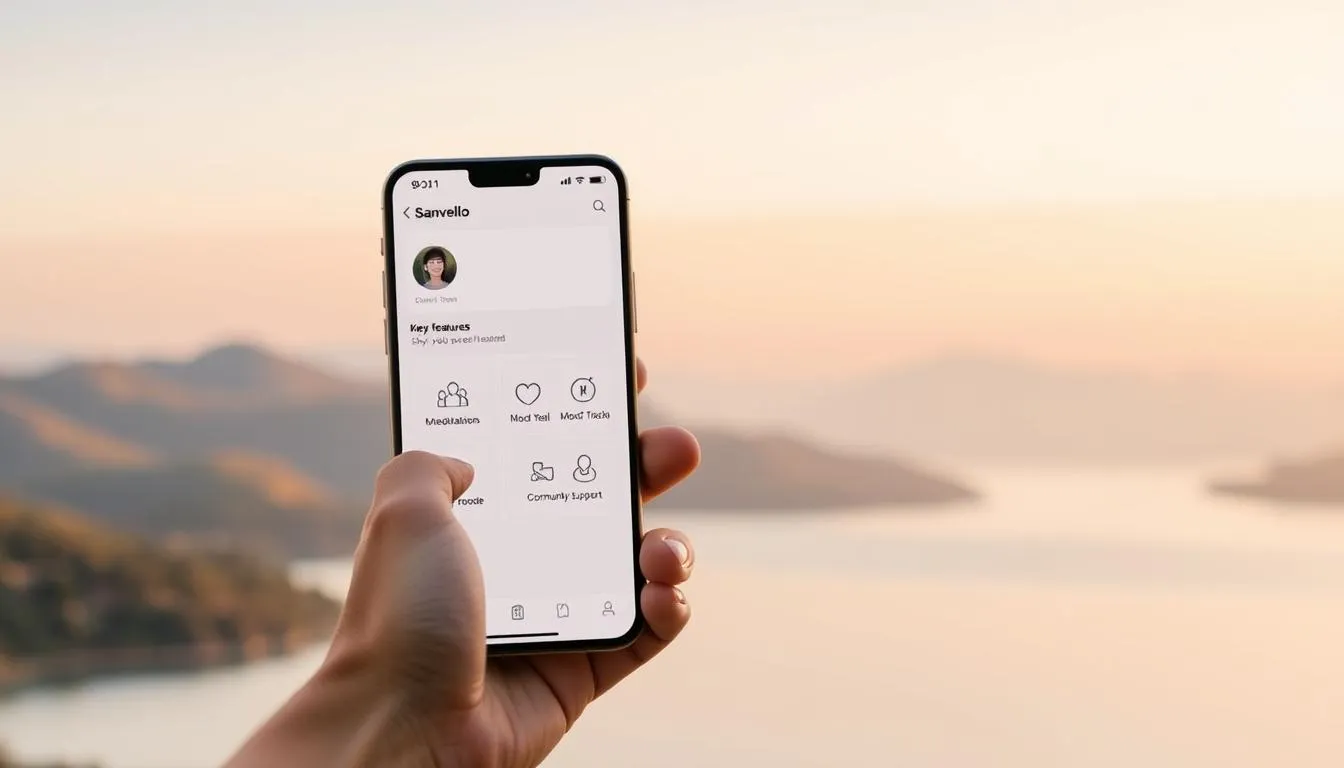
Sanvello believes mental health care should be easy to get, tailored to each person, and fun. It uses cognitive-behavioral therapy (CBT), mindfulness, and mood tracking. This creates a strong support system for users.
Key Features and Pricing
Key Features
- Mood Tracking: Users can track their emotions over time.
- CBT Tools: Provides exercises to manage stress, anxiety, and depression.
- Mindfulness and Relaxation Techniques: Offers guided meditations and relaxation strategies.
- Community Support: Users can connect with others facing similar challenges.
Pricing and Accessibility
Sanvello has a freemium model. Basic features are free, but premium content needs a subscription. It’s available on iOS and Android, reaching a wide audience.
| Feature | Free Version | Premium Version |
|---|---|---|
| Mood Tracking | Yes | Yes |
| CBT Tools | Limited | Full Access |
| Mindfulness Content | Limited | Full Access |
Pros and Cons
Sanvello’s strengths include its all-in-one mental health approach, easy-to-use interface, and both free and premium content. However, the premium subscription cost might be a drawback. The app’s success depends on how much users engage with it.
UK-Specific Offerings
Sanvello is available in the UK and follows data protection laws. It’s not an NHS-approved app but is seen as beneficial for mental health. UK users can access mood tracking and CBT tools. They also have the option to upgrade to premium services.
NHS-Approved Apps: Trusted Mental Health Resources
The NHS has picked a few mental health apps that are safe and work well. These apps help make mental health support easy to get for everyone.
NHS Mental Health Apps Library
The NHS Mental Health Apps Library is a great place to find mental health apps. These apps are tested to make sure they are safe and effective.
- Reliable Information: Apps in the NHS library are based on solid evidence and research.
- Safe and Secure: They follow strict rules for protecting your data and privacy.
- Diverse Offerings: There are many apps for different mental health needs, like stress and sleep problems.
Big White Wall (Now Togetherall)
Big White Wall, now called Togetherall, is an online community for mental health. It offers support from experts and others who understand what you’re going through. It’s a safe place to share and get help.
Key Features:
- Anonymity and safety
- Support from trained professionals
- Help from others who have gone through similar things
Catch It: Mood Diary
Catch It is a mood diary app that lets you track your mental health. It helps you understand your feelings and thoughts better.
Benefits include:
- Insights into your mood patterns
- Help with managing your mental health
- Easy way to track your feelings and thoughts
Sleepio for Insomnia and Sleep Problems
Sleepio is an app for managing insomnia and sleep issues. It uses cognitive behavioural therapy to help you sleep better.
Notable Features:
- Personalised plans to improve sleep
- Cognitive behavioural therapy for insomnia (CBT-I)
- Tracking and monitoring your sleep
These NHS-approved apps are a big step in making mental health support easier to get. They let people use technology to help their mental health from home.
Talkspace: Online Therapy and Counselling
Talkspace is a leading digital platform for online therapy and counselling. It connects people with licensed therapists. This makes it easy and accessible to tackle mental health issues.
Overview
Talkspace provides a detailed online therapy experience. Users can pick from many therapists based on their needs. The platform is easy to use, making it simple to find the support needed.
Key Features
Key Features
- Flexible Communication Options: Users can talk to therapists through text, voice, or video. This flexibility helps in expressing feelings easily.
- Personalized Therapy Plans: Talkspace helps create therapy plans that match each user’s mental health goals.
- Anonymous Therapy Option: Talkspace also offers anonymous therapy. This is great for those who prefer not to meet therapists face-to-face.
Talkspace has different pricing plans to fit various budgets. It’s available on both web and mobile, making it easy to access therapy anywhere.
Pros and Cons
Talkspace is convenient and accessible, with a wide range of therapists to choose from. However, some might miss the face-to-face interaction. The quality of therapy also depends on how comfortable one is with digital communication.
UK Availability and Considerations
Talkspace is available in the UK. But, it’s crucial to check if it meets your specific needs. This includes the availability of suitable therapists and if it aligns with UK mental health standards.
MindDoc: Mood Tracking and Mental Health Insights
MindDoc offers a unique mix of mood tracking and personal insights for mental health.
Overview
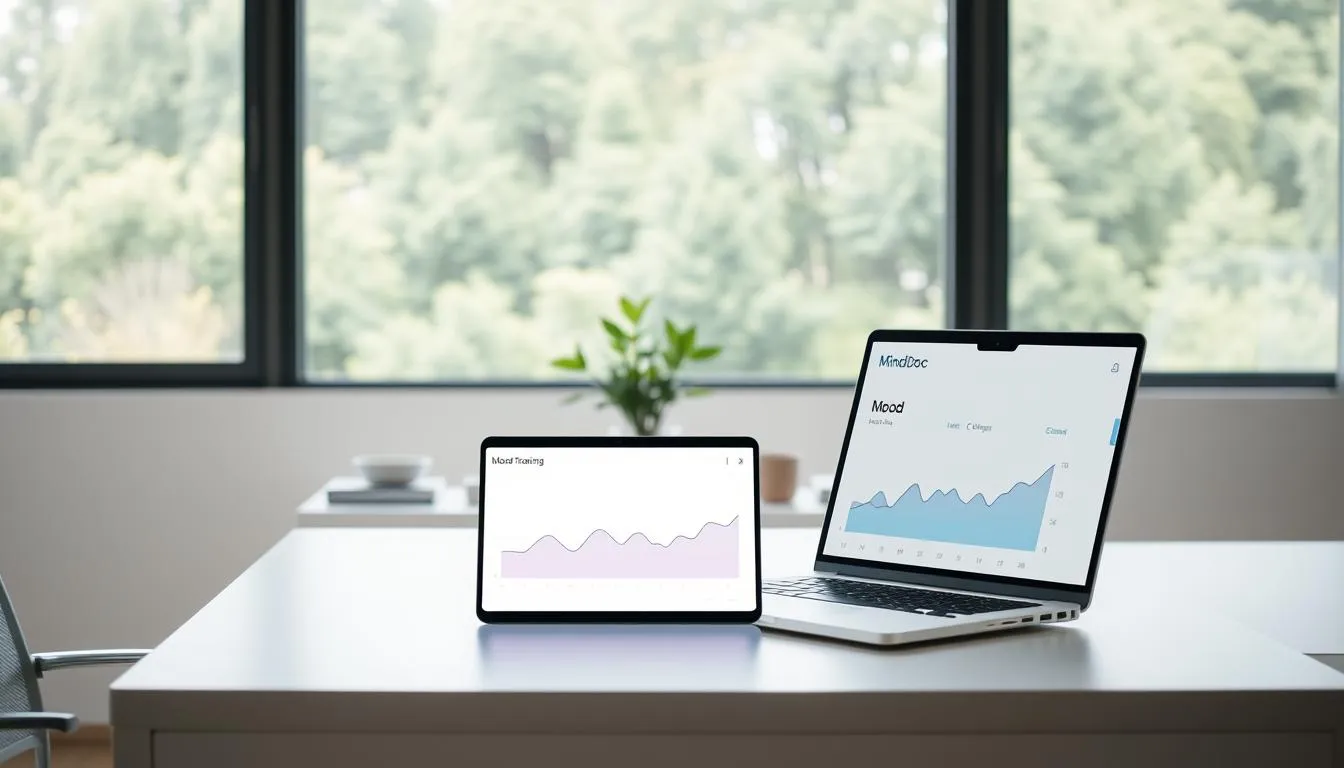
MindDoc helps users track their mental health with advanced mood tracking. It lets them understand their mood patterns for better mental wellbeing.
Key Features
- Mood tracking: Users can log their emotions and energy levels to identify patterns.
- Personalized insights: The app gives tailored advice based on user data.
- Symptom tracking: Users can monitor specific symptoms related to their mental health.
Pricing and Accessibility
MindDoc has a free version with basic features. Premium subscriptions offer more tools and insights. It’s available on iOS and Android, making it easy to access.
Pros and Cons
MindDoc’s main strength is its detailed mental health tracking. Yet, the free version is basic, and the premium might be pricey for some.
Pros:Comprehensive mood tracking, personalized insights, available on multiple platforms.Cons:Limited free version, premium subscription required for full features.
UK-Specific Offerings
MindDoc is available in the UK, offering a digital tool for mental health management. It doesn’t have UK-specific content but its features are widely useful.
Essential Resources, Tips, and Education for Mental Health Self-Care
A good mental health self-care plan has many resources and educational parts. It’s key to have a variety of tools and support systems to manage mental health well.
Complementary Resources to Support App Usage
Mental health apps work better with other resources. Online forums, support groups, and educational materials offer extra guidance and strategies for mental health management.
Key complementary resources include:
- Online therapy platforms
- Mental health blogs and podcasts
- Self-help books and guides
👉 Discover how trauma reshapes the mind and body in this groundbreaking book—🛒 The Body Keeps the Score: Brain, Mind, and Body in the Healing of Trauma (Paperback) by Bessel van der Kolk (M.D.) (Author) —an essential read for anyone on a healing journey.
Integrating Apps into Your Overall Mental Health Plan
To get the most from mental health apps, add them to a bigger mental health plan. Set clear goals, track your progress, and mix app use with other self-care practices.
Tips for effective integration:
- Set specific mental health goals
- Monitor your progress regularly
- Combine app usage with other self-care activities
UK Mental Health Charities and Support Networks
The UK has many mental health charities and support networks. They offer valuable resources and help. Services range from helplines to online support groups.
| Charity | Services Offered |
|---|---|
| Mind | Helpline, online support groups, mental health information |
| Rethink Mental Illness | Advice service, support groups, mental health advocacy |
| Anxiety UK | Helpline, online support, anxiety management resources |
When to Seek Professional Help Beyond Apps
While mental health apps are very helpful, sometimes you need professional help. If you have severe symptoms or if apps don’t help, seek help from a mental health professional.
Signs that you may need professional help:
- Persistent feelings of hopelessness or despair
- Severe anxiety or panic attacks
- Difficulty functioning in daily life
Free vs. Premium Mental Health Apps: What’s Worth Paying For
Finding the right mental health app can be tough, especially when choosing between free and paid ones. With more people seeking mental health support, it’s key to know the differences between free and premium apps.
Comparing Free and Paid Features
Free apps usually have basic tools like mood tracking and meditation. They also offer some educational content. On the other hand, premium apps give more, like personalized therapy and advanced mood tracking.
Here are some things to think about:
- Personalization: Premium apps tailor their services to fit your needs and progress better.
- Content Quality: Paid apps have better content, like sessions led by experts and more educational materials.
- Support Level: Premium services often include direct therapist access or support groups, improving your support experience.
Subscription Models and Value Assessment
It’s important to understand how mental health apps work with subscriptions. Many apps offer free basics and charge for more advanced features. Think about if the benefits match your mental health goals when deciding on the cost.
Some important points to remember:
- Cost-effectiveness: Compare the cost of premium apps to traditional therapy to see which is more affordable.
- Flexibility: Check if the app has flexible subscription plans, like monthly or yearly options.
- Cancellation Policies: Know the rules for cancelling a subscription to avoid extra charges.
NHS Prescription Apps and Reimbursement Options
In the UK, some mental health apps are available through NHS prescriptions or reimbursement schemes. These apps have been checked for their effectiveness and safety. Looking into these options can give you access to quality mental health support that might be free or covered by insurance.
To use NHS-approved apps, look into:
- NHS Mental Health Apps Library: A list of apps that have been approved for their clinical effectiveness and safety.
- Reimbursement Schemes: Some CCGs (Clinical Commissioning Groups) offer reimbursement for certain mental health apps as part of their services.
By carefully looking at features, costs, and reimbursement options, you can decide if a free or premium mental health app is best for you.
Privacy and Data Security in Mental Health Apps
Digital mental health support is growing fast. It’s key to know how these apps protect your privacy and data. Mental health apps deal with personal info, so keeping it safe is a must.
Understanding Data Collection Practices
Mental health apps collect different types of data. This can range from simple stats to very personal info. Knowing what data is collected and how it’s used is vital.
Some apps use data to get better, while others might share it for ads. It’s important to know why your data is being collected.
Data collection practices greatly affect your privacy. Always think about what you’re sharing and why it’s needed.
GDPR Compliance and UK Data Protection
The General Data Protection Regulation (GDPR) and UK Data Protection laws are strict. They say apps must be clear about data use, get user consent, and keep data safe.
GDPR compliance shows an app is trustworthy. Look for apps that are open about their data handling and follow these laws.
Questions to Ask Before Sharing Personal Information
Before using a mental health app, ask these questions:
- What data does the app collect, and why is it necessary?
- How is my data stored and protected?
- Is my data shared with third parties, and if so, who?
- How can I request that my data be deleted?
Knowing the answers helps protect your privacy and data when using mental health apps.
Conclusion
Mental health apps have changed how we care for our minds. They offer easy-to-use tools to help us stay mentally well. We’ve seen many apps, each with its own special features.
By choosing the right app, you can manage stress, anxiety, and depression better. Whether you need mindfulness, mood tracking, or therapy, there’s an app for you.
As you look into mental health apps, don’t forget to take care of yourself. Always seek professional help when you need it. With the right app and a solid mental health plan, you can become a happier, healthier version of yourself.
👉 Drift into deep relaxation with the 🛒 HoMedics SoundSleep White Noise Machine—featuring 6 calming nature sounds, a compact travel design, and auto-off timer for stress-free sleep and focus.
📌 Related Read: When Life Feels Stuck: Therapy for Transitions
Frequently Asked Questions (FAQ)
What are mental health apps, and how can they support self-care?
Mental health apps are digital tools that help with mental wellbeing. They offer mood tracking, meditation, and cognitive behavioural therapy. These apps make it easy to manage mental health.
Are mental health apps a replacement for traditional therapy?
Mental health apps are not a full replacement for therapy. They can be a great addition to traditional therapy. They help those who find it hard to get to therapy sessions.
How do I choose the right mental health app for my needs?
To pick the right app, first think about what you want to achieve. Look for apps with evidence-based methods. Also, check their privacy and data security. The NHS App Library and ORCHA ratings can help find trusted apps.
Are mental health apps secure and private?
Good mental health apps focus on keeping your data safe. They follow rules like GDPR. Always check how an app collects data before sharing personal info.
Can I use mental health apps for free?
Yes, many apps offer free versions or trials. Some need a subscription for more features. Compare free and paid options to find the best fit for you.
Are there any mental health apps specifically recommended by the NHS?
Yes, the NHS has a list of recommended apps. Apps like Togetherall, Catch It, and Sleepio are on this list. They have been checked for safety and effectiveness.
How can I integrate mental health apps into my overall mental health plan?
Use mental health apps alongside other support methods. This includes therapy, exercise, and staying connected with friends. Apps can help keep up with mental health support.
What should I look for when evaluating the credibility of a mental health app?
When checking an app’s credibility, look for evidence-based content. Also, check reviews from trusted sources and data protection compliance. If it’s on the NHS Apps Library or has a good ORCHA rating, it’s a good sign.