
Dealing with loss is one of life’s toughest challenges. The Grief Wheel model helps us understand the complex feelings and stages of the grief process. This model guides us through understanding loss and our healing journey. It makes sense of the different emotions and reactions after a big loss.
👉 Understand your relationship patterns with 🛒 Attached—a science-backed guide to adult attachment styles and building lasting love.
Key Takeaways
- The Grief Wheel model provides a structured approach to understanding the grieving process.
- It acknowledges the complexity of emotions experienced during loss.
- The model supports individuals in their healing journey.
- Understanding the Grief Wheel can help individuals cope with their emotions.
- The model is a valuable tool for those seeking to navigate their grief.
Understanding the Grief Wheel Model
The Grief Wheel model is a key tool for understanding grief. It helps us see the different grief stages people go through after losing someone or something important.
Grieving is unique to each person, but the Grief Wheel gives us a shared way to talk about it. It shows the many ways we can feel and think when we’re grieving.
Definition and Core Concepts
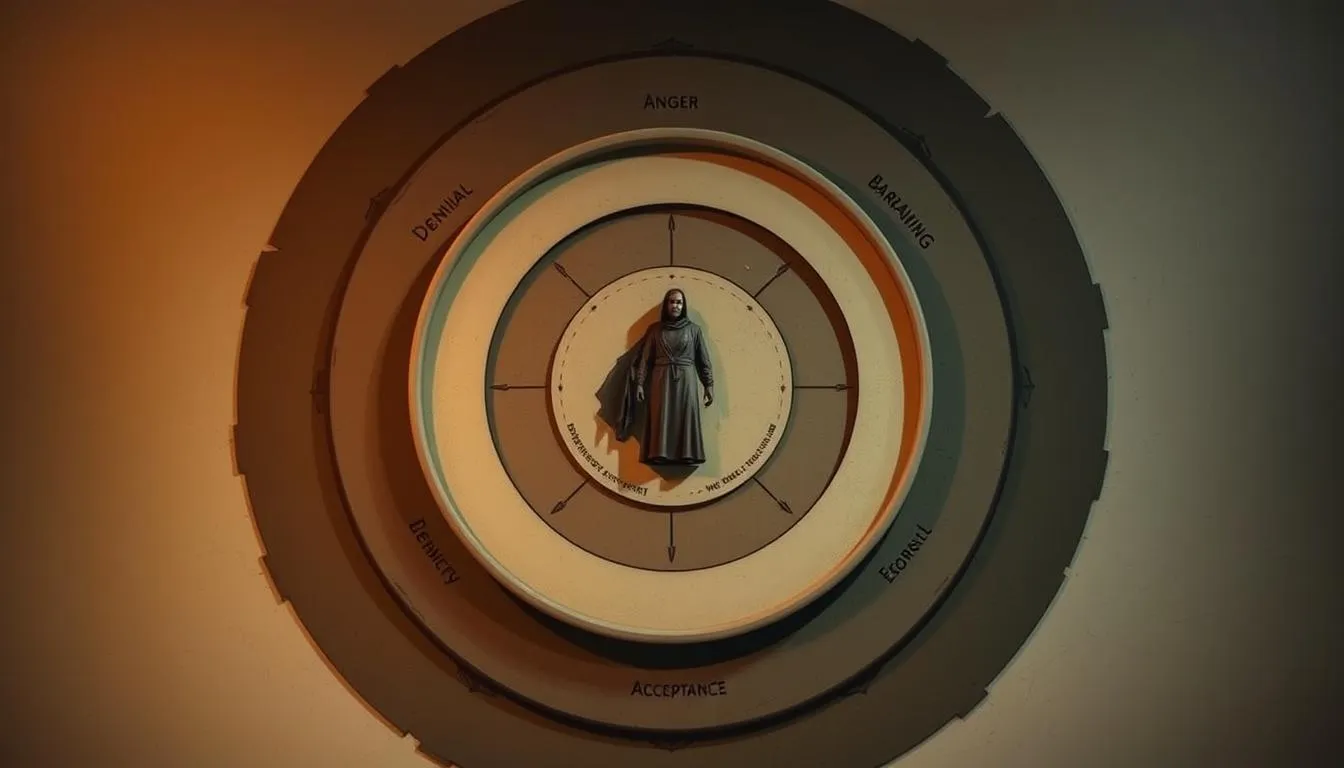
The Grief Wheel model shows grief as a circle, not a straight line. It says grief moves in different ways, not always in order. People can move back and forth between stages.
The model sees grief as a mix of feelings, thoughts, and social impacts. It also points out how trauma influence can change someone’s grief journey.
Historical Development of the Model
The Grief Wheel started with Elisabeth Kübler-Ross’s five-stage grief model. Since then, it has grown into a more detailed way to understand grief.
The Grief Wheel’s history shows how our understanding of grief has deepened. It has been shaped by many ideas and experiences. Now, it helps us support people through their loss.
The Science Behind Grief and Loss
Grief is deeply connected to our brain and mind. It’s a universal feeling, but it affects each person differently. This is because of many factors at play.
Neurological Responses to Loss
When we lose someone, our brain reacts in many ways. It starts by releasing stress hormones like cortisol and adrenaline. This can make us feel shocked or numb. Neurological responses to loss can change from person to person, affecting how we grieve.
A study looked into the brain’s role in grief. It found that areas like the prefrontal cortex and amygdala are key. These areas help us deal with our emotions during loss. Below is a table with important findings about the brain’s response to grief.
| Brain Region | Function | Response to Grief |
|---|---|---|
| Amygdala | Emotional Processing | Hyperactivity leading to intense emotional episodes |
| Prefrontal Cortex | Emotional Regulation | Reduced activity, potentially leading to impaired emotional regulation |
| Hippocampus | Memory Formation | Involvement in forming memories related to the loss |
Psychological Foundations of Grief Processing
The mind’s role in grief is complex. It involves attachment, identity, and how we cope. Our attachment style can affect how we grieve. Psychological foundations also include our resilience and finding meaning in loss.
Knowing these psychological aspects helps us understand why grief can vary. It shows the need for support that fits each person’s needs.
Components of the Grief Wheel
Grief is not a straightforward process. The Grief Wheel model shows this complexity well. It represents the stages people go through when they lose someone or something important. Unlike other models, it sees grief as a personal and ever-changing journey.
The Circular Nature of Grief
The Grief Wheel shows grief as a circle. This means the stages of grief are linked and can happen in any order. It shows that grief doesn’t follow a straight path, but rather moves in a circle.
This model recognizes the complexity of human emotions and how we all deal with loss differently. It offers a more realistic and caring view of grief.
Key Stages and Their Interconnections
The Grief Wheel includes stages like denial, anger, bargaining, depression, and acceptance. These stages are not separate; they are interconnected parts of the grief journey.
It’s important to understand how these stages are connected. For example, someone might switch between anger and sadness or feel denial and acceptance at the same time. This back-and-forth is what makes the Grief Wheel model so powerful.
By looking at these stages and how they connect, people can better understand their grief. They can find comfort in knowing their feelings are valid and part of a bigger, complex process.
Stage One: Initial Shock and Denial
The first reaction to a big loss is usually shock and feeling numb. This is a natural way to protect ourselves from the sudden news. It helps us deal with the overwhelming information.

Recognising Shock Responses
Shock can show up in different ways. People might feel detached, confused, or unable to accept the loss. It’s common to feel like you’re dreaming or that the loss isn’t real.
Seeing these reactions as part of grieving can help. It shows that what you’re feeling is normal.
The Protective Function of Denial
Denial acts as a shield, softening the blow of loss. By denying the reality at first, people can slowly accept their new situation. This denial isn’t about ignoring the loss. It’s about giving time to process emotions.
Knowing about initial shock and denial in grieving can offer comfort. It reminds us that our painful feelings are a natural part of healing.
Stage Two: Emotional Release and Pain
Emotional release and pain are key in the second stage of the Grief Wheel. This stage is vital for processing loss. As the initial shock fades, people start to face the truth of their loss. This leads to a burst of pent-up emotions.
Confronting Raw Emotions
Dealing with raw emotions is tough for many. It means facing the full range of feelings, from sadness and despair to anger and frustration. Acknowledging these emotions is essential for healing.
💡As Dr. Elisabeth Kübler-Ross said, “The greatest pain is not the pain of the moment, but the pain of the loss.” “The greatest pain is not the pain of the moment, but the pain of the loss.” – Dr. Elisabeth Kübler-Ross
Physical Manifestations of Emotional Pain
Emotional pain in this stage can also show up physically. Symptoms include feeling tired, changes in appetite, and trouble sleeping. These signs are the body’s way of reacting to the emotional turmoil.
| Physical Symptom | Description |
|---|---|
| Fatigue | Persistent feeling of tiredness or lack of energy |
| Changes in Appetite | Increased or decreased appetite leading to weight changes |
| Sleep Disturbances | Difficulty falling or staying asleep, or sleeping excessively |
Understanding these physical signs can help people see that their body is part of the grieving process.
Stage Three: Anger and Bargaining
Anger and bargaining are key emotions in the third stage of grief. They help people move towards recovery. In this stage, anger can show up in many ways.
Anger plays a big role in grieving. It can be a healing force, helping people face their feelings and start to heal.
💡 Dr. Elisabeth Kübler-Ross said, “Anger is a necessary step in the healing process, as it allows individuals to express their feelings and move forward.”
Understanding Anger
Anger can be aimed at oneself, others, or even the person who has passed away. It’s a natural response to pain and helplessness. It’s important to recognise and accept this anger to process emotions healthily.
There are different ways anger can show up. Here’s a table that shows some common expressions of anger during grief:
| Expression of Anger | Description | Example |
|---|---|---|
| Irritability | Feeling short-tempered or easily annoyed | Snapping at loved ones or becoming easily frustrated |
| Resentment | Harbouring feelings of bitterness or resentment | Feeling bitter towards others who have not experienced a similar loss |
| Indignation | Feeling outraged or offended | Railing against the perceived injustice of the loss |
The Search for Alternative Outcomes
Bargaining is also a big part of this stage. People might try to make deals with a higher power or think magical thoughts to change the loss. This search for other outcomes can offer temporary comfort, but it’s a step towards accepting the loss.
💡 Dr. Kübler-Ross said, “Bargaining is a desperate attempt to regain control in a situation where one feels utterly helpless.”
This shows how anger, bargaining, and grief are all connected.

👉 Experience deeper, more restful sleep with a soft, pressure-soothing 🛒 weighted blanket—ideal for reducing anxiety and improving relaxation.
Stage Four: Depression and Reflection
The journey of grief is not straightforward. The fourth stage, marked by depression and reflection, shows this clearly. People often feel a deep loss that turns into depression as they move through the grief wheel. This stage is key for dealing with their strong emotions.
The Quiet Phase of Grief
Depression in grief is a quiet phase where feelings are very intense. People might pull back from others, feeling sad and lost. This quiet time is important for healing, letting them face their feelings alone.
It’s vital to accept the pain and let grief weigh on you during this time.
Finding Meaning Through Reflection
When going through depression, reflection helps find meaning. Thinking about memories and the loss’s impact helps understand its importance. This reflection is not about staying in the past but integrating the loss into one’s story.
Through reflection, people can start to honour their loss. They can slowly rebuild their identity and purpose.
- Allowing oneself to experience the full depth of grief
- Engaging in reflective practices to find meaning
- Recognising the importance of this stage in the healing process
Stage Five: Acceptance and Integration
The journey through the Grief Wheel ends with acceptance and integration. This stage brings a new sense of reality and purpose. People have gone through tough emotions and challenges, gaining a deeper understanding of their loss.
Acceptance isn’t about liking what happened. It’s about facing the reality of the loss. It helps people start rebuilding their lives, finding ways to honour their loss while moving on.
Embracing a New Reality
Embracing a new reality means accepting the loss is permanent. Life won’t go back to how it was. This acceptance is key to healing, as it lets people focus on rebuilding and finding a new normal.
A key part of this stage is understanding healing isn’t about forgetting. It’s about learning to live with the loss. People start to see their experience has made them stronger and more resilient.

Incorporating Loss into Life’s Narrative
Incorporating loss into one’s life story means finding a way to include it in their identity. It’s about seeing the loss as part of their history, but not defining their whole life.
| Aspects of Integration | Characteristics |
|---|---|
| Emotional Acceptance | Acknowledging the loss and its impact |
| New Reality | Understanding life will not be the same |
| Personal Growth | Recognizing the loss as part of personal history |
By integrating their loss, people can move forward. They do this not in spite of their loss, but with a deeper understanding of themselves and their healing power.
Trauma, Grief & Healing: The Interconnected Journey
It’s key to understand how trauma affects grief. Trauma can make grief harder, so it’s important to face it head-on.
How Trauma Influences the Grief Process
Trauma can make grief more complex. It can lead to anxiety, fear, and a heightened startle response. People might also avoid things that remind them of the trauma.
- Increased anxiety and fear
- Hypervigilance and exaggerated startle response
- Avoidance of triggers that remind them of the traumatic event
This makes grief harder to deal with. It’s tough to manage emotions and accept loss.
Healing Pathways Through the Wheel
The Grief Wheel model helps understand healing. It shows how trauma and grief are connected. This helps people:
- See how trauma affects their grief
- Deal with emotions in a safe space
- Integrate their loss into their life story
Using the Grief Wheel, people can heal. It guides them through their interconnected journey of trauma, grief, and recovery.
Different Types of Loss and Their Unique Grief Patterns
It’s important to understand that loss is not just about death. It includes many other experiences, like the end of relationships, big health changes, and major life changes.
Beyond Death: Relationship Endings, Health Changes, and Life Transitions
Loss is not just about saying goodbye to someone we love. Ending a big relationship, a big health change, or a major life change can also make us grieve. These experiences can be just as hard as losing someone close to us.
Each type of loss can lead to unique grief patterns. For example, losing a relationship might make us feel rejected and regretful. On the other hand, losing a job might make us worry about our future and who we are.
Adapting the Grief Wheel to Various Loss Scenarios
The Grief Wheel model is a helpful tool for understanding different types of loss. It helps us see our emotional responses and the grieving process more clearly.
| Type of Loss | Common Emotional Responses | Grief Wheel Adaptation |
|---|---|---|
| Relationship Ending | Sadness, Anger, Regret | Focus on emotional release and pain |
| Health Change | Fear, Denial, Frustration | Emphasis on acceptance and integration |
| Life Transition | Anxiety, Uncertainty, Hope | Adaptation to new reality, finding meaning |
By understanding the specific loss we’ve experienced and the grief pattern it brings, we can use the Grief Wheel model better. This helps us grieve in a more supportive and guided way.
Supporting Others Through the Grief Wheel
When someone we care about is grieving, knowing how to support them is key. The Grief Wheel helps us understand the different stages of grief. This way, we can offer the right support at each stage.
Identifying the Stage
It’s important to know where someone is on the Grief Wheel to support them well. Each stage, from shock and denial to acceptance, has its own challenges. By knowing these, we can meet the grieving person’s needs better.
In the shock and denial stage, people often need space to process their loss. We can support them by being there without pushing them. This lets them slowly accept their reality.
Tailoring Support Strategies
Support strategies change with each stage of the Grief Wheel. For example, in the emotional release and pain stage, listening without judgment is crucial. It helps validate their feelings and acknowledges their pain.
As they move through the Grief Wheel, so should our support. In the acceptance and integration stage, we can encourage them to enjoy activities again. This helps them start rebuilding their life.
By understanding the Grief Wheel and adjusting our support, we can offer better help. This makes the grieving process healthier and more compassionate.
Common Misconceptions About Grief and Healing
Grief is a universal human experience, but it’s often misunderstood. These misconceptions can make healing harder. They can lead to unrealistic hopes and more distress for those dealing with loss.
Debunking Grief Myths
Many think there’s a ‘right’ way to grieve. But, grief is very personal and can show up differently in everyone. It’s key to know there’s no set time for grieving; it changes a lot from person to person.
Another myth is that grief can be ‘overcome’ or ‘resolved.’ But, people often learn to live with their loss. They find ways to heal and move on without forgetting what they’ve lost.
Avoiding Harmful Grief Narratives
Harmful stories about grief can make healing harder. For example, the idea that one should ‘stay strong’ for others can stop people from sharing their true feelings. This can make their grief last longer.
It’s vital to create a supportive space where people can share their feelings. This way, we can avoid harmful stories and understand grief better.
As
💡 “Grief is the price we pay for love.” – Queen Elizabeth II
, shows the deep impact of loss. By tackling common grief misconceptions, we can help people heal better.
Conclusion: Embracing the Journey Through Loss
Coping with grief is a personal journey. The Grief Wheel model helps us understand this complex process. It shows the different stages of grief, helping us make sense of our feelings after loss.
The Grief Wheel model is a detailed guide to grieving. It starts with shock and denial, moving to acceptance and integration. As we go through these stages, we learn more about our emotions and start to rebuild our lives.
Going through loss needs patience, kindness to ourselves, and support from others. Recognizing the unique nature of grief helps us create a supportive space for healing. As we move through the Grief Wheel, we gain a deeper understanding of ourselves and our healing abilities.
👉 Break bad habits and boost focus with the 🛒 kSafe Time Locking Container—a smart way to lock away distractions like snacks, phones, cigarettes, drinking, or gaming addiction.
📌 Related Read: How to Talk to Someone Who’s Struggling Emotionally
Frequently Asked Questions (FAQ)
What is the Grief Wheel model?
The Grief Wheel model helps us understand the grieving process. It outlines the different stages people go through when they lose someone or something important.
Is the Grief Wheel a linear model?
No, it’s not. The Grief Wheel is circular. It shows that grief is complex and changes over time.
What are the stages of the Grief Wheel?
The Grief Wheel has several stages. These include shock and denial, emotional release, anger and bargaining, depression and reflection, and finally, acceptance and integration.
How does trauma influence the grieving process?
Trauma can make grief harder and longer. It’s important to understand this to help those grieving.
Can the Grief Wheel be applied to different types of loss?
Yes, it can. The Grief Wheel helps with many types of loss, not just death. This includes relationship endings, health changes, and big life changes.
How can I support someone who is grieving?
To support someone grieving, know where they are on the Grief Wheel. Then, offer support that fits their current stage.
Are there common misconceptions about grief and healing?
Yes, there are myths about grief and healing. Knowing these myths can help people deal with their grief better and avoid harmful beliefs.
What is the role of denial in the grieving process?
Denial is a protective shield in the early stages of grief. It helps people cope with the shock of their loss.
How does the Grief Wheel model facilitate healing?
The Grief Wheel helps people understand and deal with their emotions. This way, they can accept their loss and start healing.